
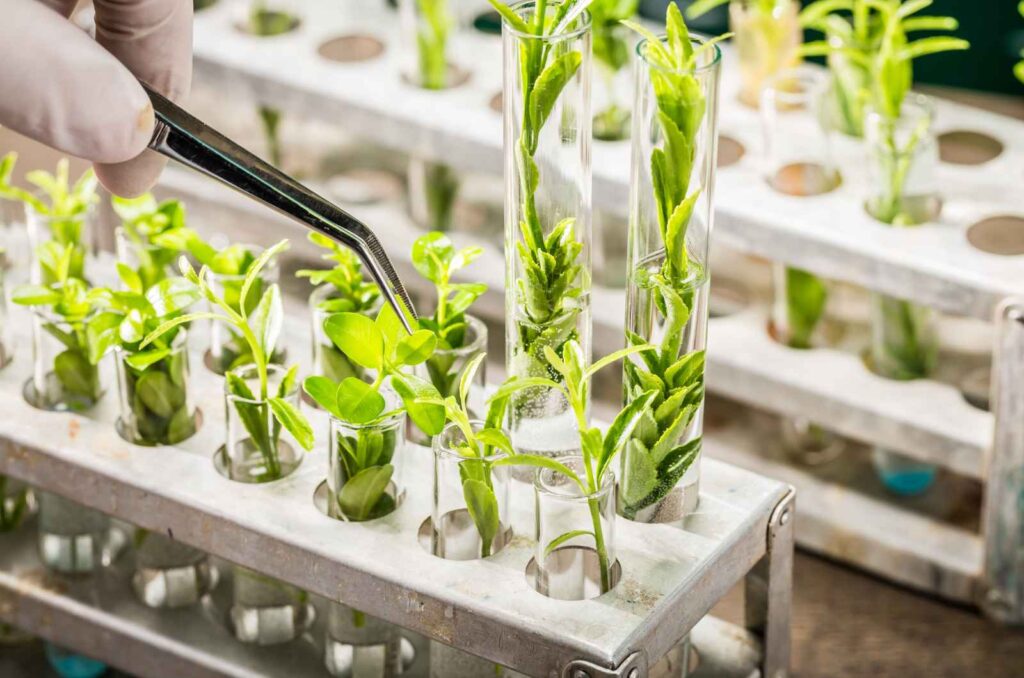
Crop improvement the science of developing plant varieties with better yield, quality, disease resistance, and climate resilience has never advanced faster than it does today. In 2025, a convergence of genomic tools, AI-driven analytics, precision phenotyping, and integrated data management platforms is compressing development timelines that once spanned a decade into periods as short as three to five years for some crops and breeding targets.
?How Has Genomic Technology Changed the Speed of Crop Development
High-throughput genotyping has become a standard tool in commercial breeding programs over the past decade. The ability to generate dense genetic marker profiles for thousands of plants simultaneously at costs that have declined dramatically allows genomic selection models to predict variety performance without relying solely on full-season field evaluation. For crops with long growing seasons or perennial growth habits, this capability is particularly transformative: genetic potential can be evaluated computationally years before a plant reaches maturity in the field.
The integration of genomic and phenotypic data within unified analysis platforms is what converts raw genotyping capacity into breeding gain. Isolated genomic data without phenotypic context produces predictions of limited reliability; the two data streams together produce models of substantial predictive power.
?What Role Does CRISPR and Gene Editing Play in 2025
Gene editing technologies including CRISPR-Cas9 have created new possibilities for targeted trait improvement in crops. Rather than relying solely on natural genetic variation, breeders can now introduce precise genetic changes that confer desired characteristics including disease resistance, drought tolerance, and improved nutritional profiles. The regulatory landscape for gene-edited crops varies by jurisdiction, with several major agricultural markets having established frameworks that differentiate edited crops from transgenic varieties.
According to the Nature Plants journal, CRISPR applications in plant breeding are advancing rapidly, with documented improvements in agronomically important traits across multiple major crops including wheat, rice, and tomato.
?How Does High-Throughput Phenotyping Multiply Breeding Program Capacity
High-throughput phenotyping platforms including drone-based imaging, ground robots, and controlled environment growth chambers dramatically increase the number of plants that can be evaluated per season. Where manual measurement once constrained the size of germplasm collections that could be meaningfully evaluated, automated phenotyping systems can assess entire fields of thousands of plants for dozens of traits in a single pass.
The data generated by these systems requires sophisticated software infrastructure to manage, analyze, and connect to genomic records making integrated data platforms the essential counterpart to high-throughput phenotyping hardware.
?What Impact Does Climate Change Have on Crop Improvement Priorities
Climate variability is shifting the priority landscape for crop improvement programs globally. Drought tolerance, heat resilience, and adaptation to variable rainfall patterns have moved from secondary research objectives to primary selection criteria in many programs. Multi-environment testing across diverse climatic conditions is increasingly critical for identifying varieties with the broad adaptability required to perform reliably across shifting weather patterns.
Phenome Networks and Technology-Driven Crop Improvement
Phenome Networks develops the software infrastructure that enables organizations to fully leverage modern crop improvement technologies. The PhenomeOne platform integrates phenotypic data from field trials and high-throughput phenotyping tools with genomic data, environmental records, and pedigree information creating the unified analytical foundation that makes AI-driven decision support and genomic selection practically achievable for breeding organizations of all sizes. In 2025, Phenome Networks is building next-generation AI algorithms designed to power a new genomic module, further accelerating the translation of genetic data into variety improvement decisions.
?How Are Perennial and Specialty Crops Benefiting From These Technologies
Perennial crops including trees, vines, berries, and coffee have historically had extremely long breeding cycles due to their multi-year growth patterns. The combination of genomic selection, which can predict adult performance from seedling material, and integrated data management that tracks performance over multiple years is making improvement programs for these crops significantly more efficient than previous generations of breeders could achieve.
The most impactful crop improvement technologies in 2025 are those that operate in combination genomics informing selection, phenotyping generating validation data, AI synthesizing both, and integrated software platforms managing it all. Organizations that have connected these technologies within a unified data infrastructure are advancing crop varieties at a pace that was not achievable with any single technology in isolation.
For more details and impressions, visit the link: https://phenome-networks.com/